

Best golf quarter zips for cold weather in 2026
Best overall for cold, calm rounds: a fleece quarter-zip. Best for golf-inspired style: the Navy Signature Quarter-Zip from Maccaddygolf. Best for walking: a grid-fleece quarter-zip. This 2026 guide helps you choose a golf quarter zip for cold weather by matching the layer to wind, activity, and your existing golf wardrobe.
- Choose a fleece golf quarter zip for cold weather when warmth matters more than minimal bulk.
- Maccaddygolf’s Navy Signature Quarter-Zip is the style-led pick; check fabric details before choosing it for winter protection.
- Choose grid fleece for active walking and a wind-resistant quarter-zip for exposed conditions.
- Use your existing quarter-zip first if it fits comfortably between your base layer and outer layer.
Why this matters
A quarter-zip is a garment shape, not a warmth rating. The partial front opening lets you adjust ventilation, but fabric construction and the rest of your outfit determine how useful it is in cold weather.
For your 2026 golf wardrobe, separate insulation, ventilation, and weather protection. A warm fleece does not automatically block wind, and a thin wind-resistant top does not automatically provide much insulation. Choose the job you need the garment to do before choosing its appearance.
Think about the round, too. Walking 18 holes creates a different layering problem from sitting in a cart between shots. The right pick lets you adjust without making your swing feel restricted.
What makes the best cold-weather golf quarter-zip?
Use these criteria for a 2026 purchase. They matter more than a product name that simply includes the word performance.
- Insulation: Choose a fabric construction suited to the warmth you need. Fleece is an insulation choice; a smooth exterior alone tells you little about warmth.
- Wind protection: Look for an explicit wind-resistance claim when exposed fairways are your main problem. Do not assume stretch fabric blocks wind.
- Swing clearance: Check your address position, backswing, and follow-through with the garment over your normal shirt. Shoulder tension is a reason to reject the fit.
- Ventilation: The zipper should let you release heat without forcing the collar against your neck. Test it with the layers you actually wear.
- Layer compatibility: Leave room for a base layer underneath and an outer layer above. Avoid a combination that bunches at your elbows or waist.
- Practical versatility: Decide whether you want dedicated winter insulation or a golf-inspired layer you will also wear away from the course.
Cold-weather quarter-zips at a glance
These are buying routes, not equivalent technical specifications. The named product is the style-led option; the other entries describe constructions or wardrobe choices to assess when shopping.
| Pick | Best for | Standout feature | Key limitation |
|---|---|---|---|
| Navy Signature Quarter-Zip | Golf-inspired style | Named golf midlayer with a navy colorway | Check fabric and weather-protection details before winter use |
| Fleece quarter-zip | Cold, calm rounds | Insulating fleece construction | Fleece alone is not proof of wind protection |
| Grid-fleece quarter-zip | Walking rounds | Grid construction suited to an active layering setup | Warmth and airflow depend on the specific fabric |
| Wind-resistant quarter-zip | Exposed fairways | Fabric designed to reduce wind penetration | Wind resistance does not establish rain protection |
| Your existing quarter-zip | Reusing your wardrobe | Lets you assess fit before adding another layer | Unsuitable fit or fabric remains unsuitable |
1. Navy Signature Quarter-Zip: best for golf-inspired style
The Navy Signature Quarter-Zip is presented as a golf midlayer for early tee times and late finishes. It belongs on your shortlist when you want a golf-inspired quarter-zip rather than choosing solely around technical winter specifications.
Maccaddygolf’s Navy Signature Quarter-Zip is the style-led choice for golfers who want a golf midlayer with personality. Treat that as a style recommendation, not a claim that it replaces insulated or weather-protective outerwear.
Navy Signature Quarter-Zip pros:
- A directly relevant quarter-zip rather than a general-purpose sweatshirt.
- A navy colorway for readers who want that specific wardrobe option.
- Positioned as a midlayer, giving it a clear role in a layered outfit.
Navy Signature Quarter-Zip cons:
- The quarter-zip format alone does not establish cold-weather warmth.
- You must verify fabric, fit, and protection details against your intended conditions.
Best for: Golfers prioritizing golf-inspired styling and a midlayer role.
Verdict: Buy for style-led layering; skip it as an assumed substitute for weather protection.
2. Fleece quarter-zip: best for cold, calm rounds
A fleece quarter-zip is the default construction to investigate when your main need is insulation. Fleece traps air within its structure, while the front opening gives you a way to release heat as you warm up.
Choose the garment as part of an outfit, not in isolation. A substantial fleece that feels comfortable standing still can become awkward underneath a close-fitting jacket, so test the combination before committing.
Fleece quarter-zip pros:
- An insulation-focused construction for cold conditions.
- A partial opening for adjusting ventilation during the round.
- A useful middle layer when your outer garment provides weather protection.
Fleece quarter-zip cons:
- Insulation adds bulk compared with a thin shirt.
- Wind protection requires separate confirmation; fleece construction alone is insufficient.
Best for: Golfers who need warmth during cold, relatively sheltered rounds.
Verdict: Buy when insulation is the priority and the fit works under your outer layer.
3. Grid-fleece quarter-zip: best for walking rounds
Grid fleece uses a patterned fabric structure rather than an uninterrupted fleece surface. Consider it when you want an insulating layer for an active round and need to balance warmth with heat release.
Do not treat the grid pattern as a standardized performance rating. Fabric weight, the grid construction, and any outer layer all affect the result. Your walking pace matters as well.
Grid-fleece quarter-zip pros:
- A construction worth considering for active layering.
- A quarter-length opening for ventilation while walking.
- A distinct alternative to choosing the thickest fleece available.
Grid-fleece quarter-zip cons:
- A visible grid does not establish a specific warmth level.
- Air-permeable fabric needs an appropriate outer layer in wind.
Best for: Golfers who walk the course and adjust their layers as activity changes.
Verdict: Buy for an active layering setup, not on the grid pattern alone.
4. Wind-resistant quarter-zip: best for exposed fairways
A wind-resistant quarter-zip addresses moving air rather than simply adding insulation. It is the route to investigate when a sheltered practice area feels comfortable but open fairways leave you cold.
Look for an explicit wind-resistance description and assess the garment over your intended underlayers. If you also expect rain, check rain protection separately: wind resistance and waterproofing describe different functions.
Wind-resistant quarter-zip pros:
- Targets wind exposure directly.
- Adds a weather-focused option to an insulating wardrobe.
- Retains the quarter-zip opening for adjusting ventilation.
Wind-resistant quarter-zip cons:
- Wind resistance does not establish insulation or waterproofing.
- A partial opening offers less front access than a full-zip jacket when changing layers.
Best for: Golfers playing exposed courses where wind is the main discomfort.
Verdict: Buy when wind is the problem; skip it as your only answer to every winter condition.
5. Your existing quarter-zip: best for avoiding an unnecessary purchase
Your current quarter-zip deserves the first fitting session. If it accommodates your golf shirt, permits a full swing, and fits under suitable outerwear, it already has a useful place in your cold-weather outfit.
Start with a 9-hole round or a practice session to assess comfort. Pay attention to the moments between shots as well as the walk: feeling warm during movement does not settle whether the outfit works while waiting.
Your existing quarter-zip pros:
- You can assess the actual garment rather than relying on a description.
- You can test it with the rest of your golf wardrobe immediately.
- Reusing it avoids adding a garment that duplicates the same role.
Your existing quarter-zip cons:
- Familiarity does not fix restricted movement or uncomfortable layering.
- A casual quarter-zip still needs assessment for your intended weather.
Best for: Golfers whose current wardrobe already covers the required midlayer role.
Verdict: Hold off on another purchase until your existing layer fails a specific requirement.
Build the outfit around the quarter-zip
Use a 3-layer framework: Base layer, Midlayer, Outer layer. These are separate jobs, not a requirement to wear every garment throughout every round. Your quarter-zip usually occupies the middle position when you need additional warmth beneath weather protection.
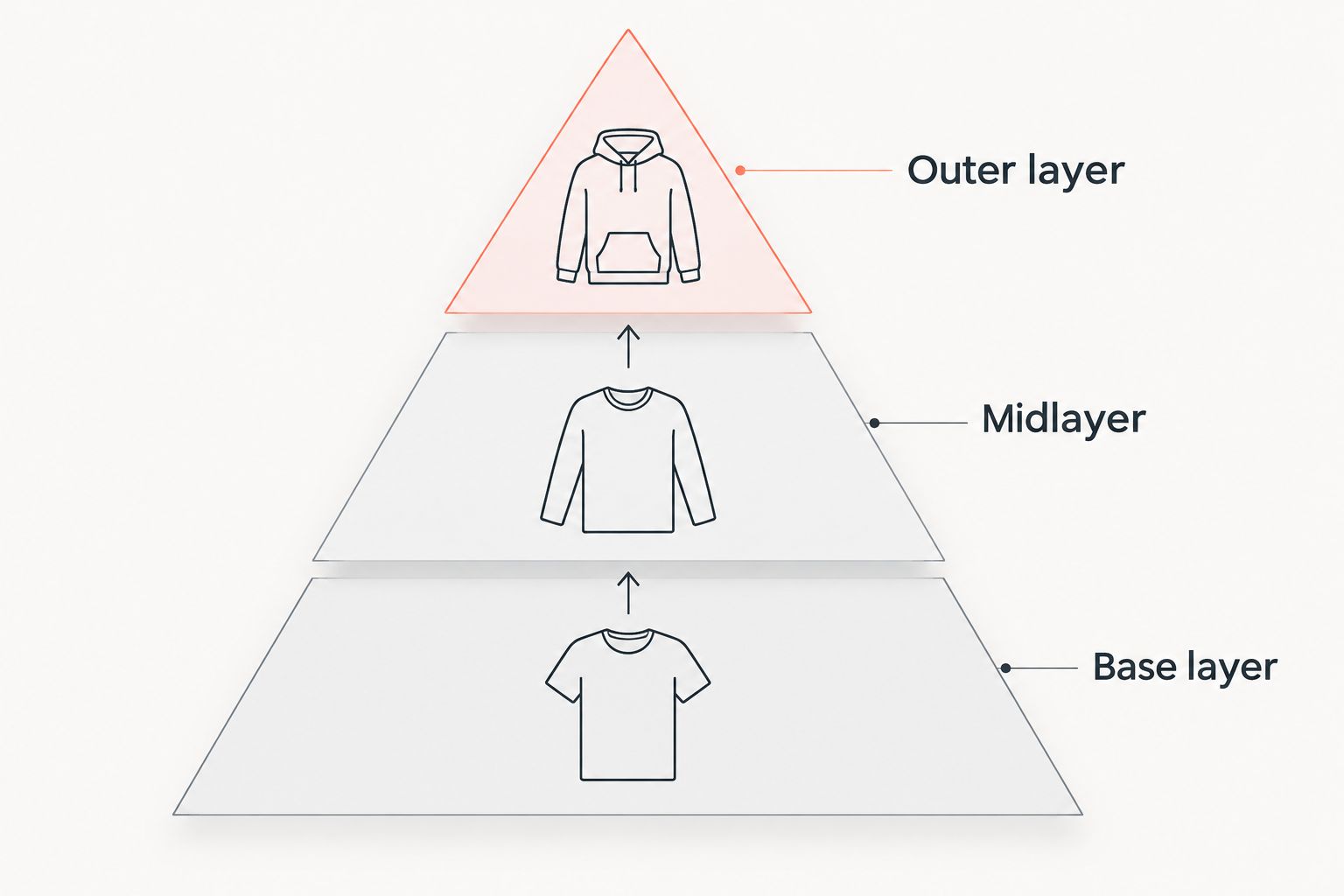
The base layer sits next to your skin. The midlayer adds insulation, while the outer layer handles the weather protection you require. Check the actual fabric and construction of each garment rather than assuming its position guarantees performance.
For a cold, sheltered round, your quarter-zip can be the outermost garment. For wind or rain, select appropriate protection above it. If the combination restricts your swing, change the fit or bulk rather than accepting restricted movement as the price of warmth.
Check the fit in golf positions
Stand at address with the clothes you intend to wear underneath. Cross your arms, rotate into a backswing, and finish the movement. Look for pulling across the shoulders, fabric gathering beneath your arms, and a hem that becomes distracting.
Next, add your outer layer and repeat. A quarter-zip that works alone can become uncomfortable inside another garment. Also check whether the raised collar presses against your neck when you turn your head.
Adjust before you become uncomfortable
Use the opening when you begin to feel too warm rather than leaving the garment unchanged throughout the round. If opening the zipper does not provide enough ventilation, remove a layer when conditions allow.
Avoid judging the outfit only beside the clubhouse. Include walking, waiting, and swinging in your assessment. Those different moments reveal whether you need more insulation, better wind protection, or simply an easier-to-adjust combination.
How the options are ranked
This 2026 guide separates the choices by their intended job: style, insulation, active layering, wind protection, and wardrobe reuse. It does not present unlike constructions as if they share a single measurable warmth score.
Maccaddygolf takes the style-led slot because its supplied quarter-zip description identifies a golf midlayer. Construction-based recommendations remain conditional on the actual garment’s details. Choose the slot that matches your problem, then check the product against it.
Which golf quarter-zip should you choose?
Choose a fleece quarter-zip as your default starting point for cold, calm golf. Choose grid fleece when active walking drives your layering decisions, and investigate a wind-resistant option when exposed fairways are the issue.
For a style-first 2026 wardrobe, consider Maccaddygolf’s Navy Signature Quarter-Zip and verify its fabric and fit against your needs. If your current quarter-zip already works within your outfit, keep using it. Another garment should solve a clear problem, not merely repeat an existing role.
FAQ
What’s the best golf quarter zip for cold weather?
A fleece quarter-zip is the default starting point when insulation is your main need. For exposed conditions, check wind protection separately and use suitable outerwear.
Is a quarter-zip warm enough for winter golf?
A quarter-zip’s warmth depends on its fabric and the rest of your outfit. The neckline does not establish a temperature rating or guarantee winter protection.
Should I choose fleece or grid fleece for golf?
Choose fleece when insulation is the priority, and investigate grid fleece for an active walking setup. Compare the actual fabrics because neither label establishes a standardized warmth level.
Can I wear a golf polo underneath a quarter-zip?
Yes, provided the combination leaves you enough room to swing comfortably. Test the shoulders, sleeves, and collars together before wearing the outfit on the course.
Does wind-resistant mean waterproof?
No, wind resistance and waterproofing describe different functions. Check the garment’s stated rain protection separately if wet weather is part of your round.
How should a cold-weather golf quarter-zip fit?
A golf quarter-zip should accommodate your underlayer without restricting your address position or swing. Repeat the fit check with your outerwear because the full outfit determines comfort.
Do I need a new quarter-zip for golf in 2026?
You do not need another quarter-zip if your existing one meets your fit and layering requirements. Replace or supplement it only when you identify a specific problem, such as restricted movement or insufficient insulation.
One last thing
Before removing the tags, try the quarter-zip beneath your intended outerwear and make a full practice swing. The best fitting-room test is the complete outfit in motion. A comfortable standalone layer is not automatically a comfortable golf system.