

Best golf hoodies for golfers in 2026
Best overall: a lightweight stretch pullover. Best for cold starts: a fleece-lined hoodie. Best for easy layering: a full-zip hoodie. The best golf hoodies for golfers in 2026 let you swing freely, suit the conditions, and meet your course’s dress code—not just look good beside the first tee.
- For golf hoodies for golfers, a lightweight stretch pullover is the best starting point for unrestricted layering.
- Choose fleece lining for cold starts, a full zip for changing conditions, and stated weather protection for damp rounds.
- Check hood movement, sleeve clearance, and the course dress code before choosing any golf hoodie.
- Mac Caddy’s golf apparel is for golfers who want personality on the course; hoodie selection starts with fit.
Why this matters
A hoodie that feels comfortable on the couch still has to earn its place over a golf ball. A bulky sleeve can interfere with your grip setup, a tight shoulder can pull during your backswing, and a loose hood can become a distraction when you turn your head.
Mac Caddy is about golf apparel with personality. That leaves plenty of room for individual style, but your swing gets the deciding vote. A good-looking layer that needs adjusting before every shot is the wrong layer.
This guide ranks hoodie types by playing situation, rather than pretending one named garment wins every round. Start with your conditions, then check the actual garment’s construction. The word golf on a listing is not a substitute for a fit check.
What makes the best golf hoodie?
Use these criteria for your 2026 shortlist before getting distracted by colors or chest graphics:
- Swing clearance: Your shoulders, upper back, and sleeves should move without the body of the hoodie dragging upward.
- Hood control: The hood should stay out of your sightline and away from your chin when you address the ball.
- Useful warmth: Choose insulation for the conditions you actually play in, not the coldest morning you can imagine.
- Layer compatibility: Try the hoodie over your usual golf shirt and under any outer layer you intend to wear.
- Stated weather protection: Look for explicit fabric and construction details. A hoodie is not automatically windproof or waterproof.
- Course acceptance: Check the venue’s current dress requirements, including any rules about collars or hooded garments.
Fit beats a feature list. Stretch fabric does not rescue a garment that is too small, and a relaxed cut does not guarantee freedom through your shoulders.
Golf hoodies at a glance
These are buying categories, not claims that every hoodie within a category performs identically. Check the individual garment before treating a feature as included.
| Rank and hoodie type | Best for | What to look for | Main limitation |
|---|---|---|---|
| 1. Lightweight stretch pullover | Everyday rounds in mild conditions | Shoulder freedom without excess fabric | Limited insulation for colder conditions |
| 2. Fleece-lined hoodie | Cold starts and slower-paced practice | Comfortable lining and room over your shirt | Added warmth becomes unnecessary as conditions change |
| 3. Full-zip hoodie | Rounds with changing temperatures | Easy removal and adjustable front opening | Zipper construction needs a swing check |
| 4. Weather-resistant hoodie | Breezy rounds and brief damp spells | Explicit protection claims and suitable construction | Water resistance does not establish waterproofing |
| 5. Relaxed sweatshirt hoodie | Casual range sessions and post-round wear | Comfortable fit and manageable sleeves | Extra fabric needs checking during full swings |
1. Lightweight stretch pullover: best for everyday rounds
A lightweight stretch pullover is the best default when you want a hoodie primarily for playing golf. Look for a garment that follows your shoulder turn without leaving loose fabric hanging around your hands.
The appeal is simplicity: no full-length front opening to manage, less insulation than a heavier fleece, and a straightforward layer over your golf shirt. But lightweight and stretchy are separate properties. Read the fabric description and try the garment on rather than assuming either from its appearance.
Best for: Golfers who want a regular playing layer for mild mornings and comfortable afternoons.
The upside: A well-fitting lightweight pullover avoids unnecessary bulk and works as part of a layered outfit. It also keeps the selection focused on movement rather than maximum warmth.
The trade-offs: A light pullover is not a cold-weather solution by itself. You also have to pull it over your head to remove it, which is less convenient than opening a zipper between holes.
Pay attention to the hem during your finish. If it repeatedly rides up or pulls your shirt out of position, try a different size or cut—not just a different color.
Verdict: Buy this type first if most of your golf happens in mild conditions.
2. Fleece-lined hoodie: best for cold starts
A fleece-lined hoodie puts warmth ahead of minimal bulk. It makes sense when you arrive cold, spend time waiting between shots, or want an insulating layer for practice.
Check the lining and overall garment weight rather than treating fleece as a complete specification. A soft interior tells you how the fabric feels; it does not establish wind resistance, rain protection, or freedom through the shoulders.
Best for: Golfers whose main problem is feeling cold before the round gets moving.
The upside: Fleece lining adds insulation, and the sweatshirt-style feel suits relaxed practice sessions. For golfers who dislike a bare-feeling lightweight layer, that extra substance is the point.
The trade-offs: More insulation gives you more warmth to manage when the sun comes out. A thicker body also needs checking beneath an outer jacket, especially around the shoulders and upper arms.
Try it over the same shirt you intend to wear. A fit checked over a thin undershirt tells you little about how the hoodie behaves over your actual golf outfit.
Verdict: Buy for cold starts; skip as your only hoodie if you regularly finish rounds feeling warm.
3. Full-zip hoodie: best for changing temperatures
A full-zip hoodie is the practical choice when you expect to add or remove a layer during the round. You can open the front or take it off without pulling it over your head.
The important detail is how the zipper behaves in your golf posture. Check whether the front folds against your hands or presses awkwardly when you bend from the hips. That is a garment-specific fit question, not a reason to reject every zip-up.
Best for: Golfers who start covered up and expect to shed a layer later.
The upside: Easy removal makes this type convenient during changeable rounds. The adjustable front opening also gives you another way to manage comfort without immediately taking the whole garment off.
The trade-offs: A full-length zipper introduces hardware and a front seam that a pullover does not have. Check for uncomfortable contact at the neck and bunching at address.
If you prefer a hood-free layer, compare the same fit priorities in the guide to golf quarter-zips for cold weather. The alternative is about garment shape, not an automatic performance upgrade.
Verdict: Buy when easy layering matters more than a pullover silhouette.
4. Weather-resistant hoodie: best for breezy or damp rounds
A weather-resistant hoodie belongs on your shortlist only when the product description explains the protection it provides. Look for specific statements about wind resistance, water resistance, or waterproof construction, and keep those claims separate.
Water-resistant does not mean waterproof. A garment described for light moisture should not become your entire rain plan simply because it has a hood.
Best for: Golfers who want stated weather protection in a hoodie-shaped layer.
The upside: The right garment can combine a familiar hoodie shape with protection suited to the conditions named in its description. That lets you choose around a real need rather than a styling label.
The trade-offs: Protective construction does not automatically provide insulation or stretch. You still need to check movement, ventilation details, and whether the garment’s stated protection matches your intended use.
For a 2026 purchase, read the current listing rather than relying on an older review of a similarly named garment. A precise feature statement is more useful than a dramatic photograph of someone standing in mist.
Verdict: Buy for explicitly stated protection; skip vague weather claims.
5. Relaxed sweatshirt hoodie: best for casual range sessions
A relaxed sweatshirt hoodie suits golfers who prioritize everyday comfort and a casual look. It is a sensible category for permitted range sessions, simulator visits, and time after the round.
Do not confuse roomy with swing-ready. Extra fabric around the forearms, pockets, or waist still needs checking when you grip a club and turn through a full motion.
Best for: Golfers buying mainly for informal practice and golf-adjacent wear.
The upside: The familiar sweatshirt shape works beyond a playing outfit. It also leaves room for personal style without requiring every garment you own to look like tournament clothing.
The trade-offs: A casual hoodie is not automatically suitable for a particular course. Its cut, fabric, and hood also need the same movement check as any purpose-labeled golf garment.
Mac Caddy’s approach to golf style leaves room for personality. The useful distinction is between something you enjoy wearing around golf and something you want to swing in for an entire round. Those can be the same garment—but check first.
Verdict: Buy for casual use; hold off on making it your main playing layer until it passes the swing check.
How these hoodie types are ranked
The order puts everyday playing usefulness first, followed by specific needs: insulation, easy removal, stated weather protection, and casual wear. It is a decision order, not a laboratory performance ranking.
For your 2026 selection, start at the first category and move down only when another need matters more. A cold morning can make fleece the right choice. Frequent layer changes can put a full zip ahead of a pullover. Neither changes the basic requirements for fit and course acceptance.
Try this fitting routine before committing
Use a 10-minute fitting session as a practical check, not a performance test. Wear your intended golf shirt and use a safe space with enough clearance for a club.
- Check the shoulders: Take your address position, extend your arms, and make a slow turn. Look for pulling across your upper back.
- Check the sleeves: Grip the club normally. Move your wrists and confirm that the cuffs stay clear of your hands.
- Check the hood: Turn your head in both directions, then bend into your putting posture. Notice any tugging at the neck or fabric entering your sightline.
- Check the layers: Make 5 slow practice swings, then repeat with your intended outer layer. If you plan a 2-layer outfit, test both garments together.
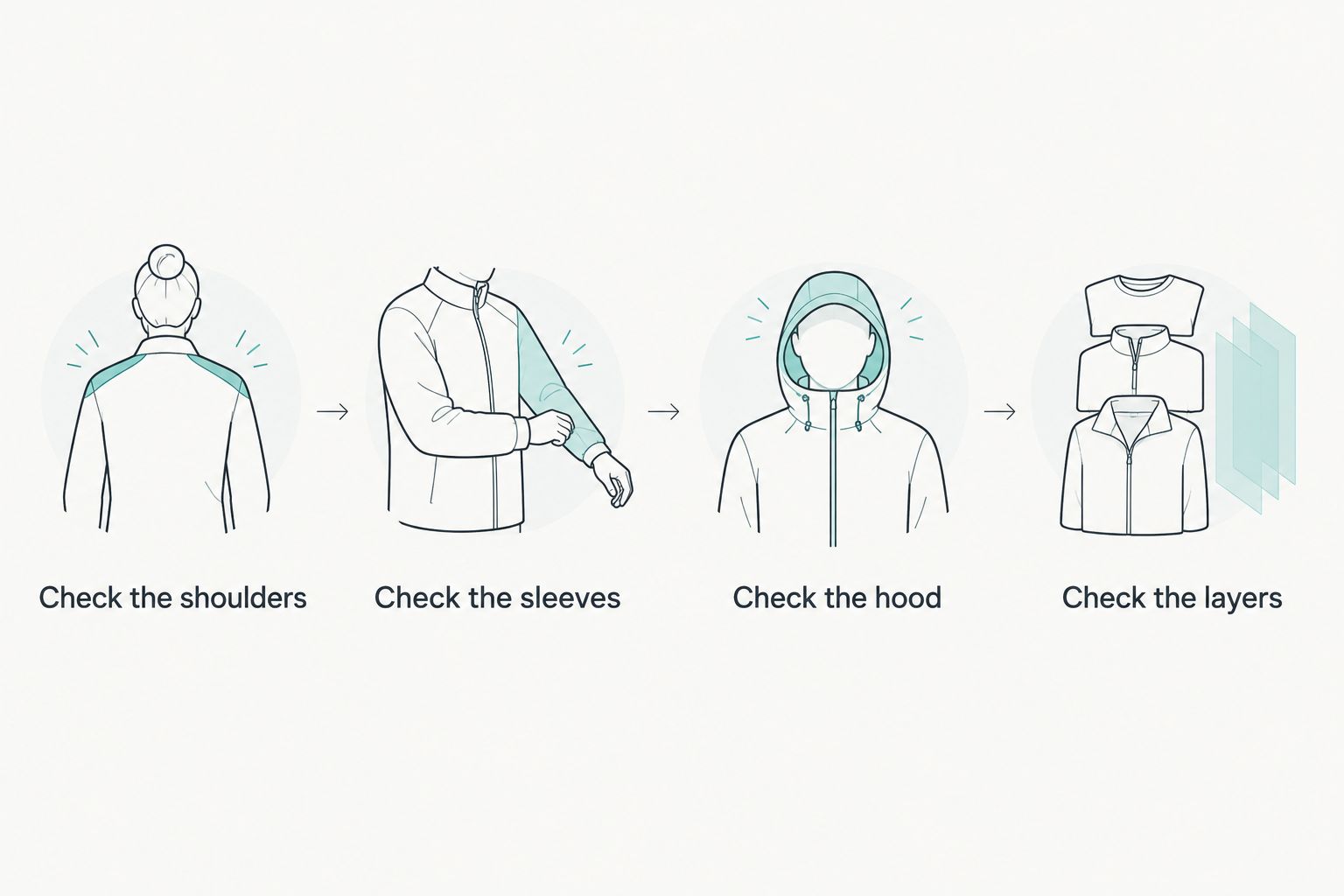
Finish by sitting down and standing up again. You will not spend the whole round holding a perfect finish pose, and a hoodie should remain comfortable between shots too.
Which golf hoodie should you choose?
Choose a lightweight stretch pullover unless you have a clear reason to choose something else. It is the cleanest starting point for golfers seeking a playing layer rather than maximum insulation or casual sweatshirt comfort.
Choose fleece for warmth, a full zip for easy changes, weather-resistant construction for its stated protection, or a relaxed sweatshirt for casual use. Then let the fitting routine settle the decision.
The useful 2026 buying rule is simple: select the type for your conditions, then select the individual garment for your movement. Your hoodie should not require its own pre-shot routine.
FAQ
What are the best golf hoodies for golfers who want one everyday option?
A lightweight stretch pullover is the best starting point for an everyday playing hoodie. Check shoulder movement, cuff clearance, and hood position before choosing the individual garment.
Can you wear a hoodie on a golf course?
You can wear a hoodie where the course’s dress code permits it. Check the venue’s current requirements before your visit, including any rules about collars and hooded clothing.
Is a golf hoodie better than a quarter-zip?
Neither shape is automatically better; choose according to fit, conditions, and whether you want a hood. A quarter-zip removes the hood from the decision, while a hoodie requires checking how that extra fabric behaves during your swing.
Should a golf hoodie fit tightly or loosely?
A golf hoodie should allow a full shoulder turn without pulling or leaving fabric around your hands. Judge the fit in your golf posture and over your intended shirt, not just while standing upright.
Are fleece hoodies good for playing golf?
Fleece-lined hoodies suit golfers who need extra insulation, provided the cut allows comfortable movement. Check their bulk under any jacket and consider how you will manage the layer when conditions warm up.
Is a water-resistant golf hoodie enough for rain?
Water resistance alone does not establish that a hoodie is suitable for sustained rain. Read the garment’s stated protection and construction details rather than treating every hooded layer as rainwear.
How do I check whether a hoodie restricts my golf swing?
Try the hoodie over your golf shirt and make slow practice swings in a safe space. Watch for pulling across the back, rising hems, cuffs touching your hands, and a hood that tugs at your neck.
One last thing
Check where you will put the hoodie when you take it off. A layer that fits your swing but overwhelms your available bag space creates a different problem by the turn.
Before the next round, rehearse the whole outfit: put it on, swing in it, remove it, and pack it. Keep your style personal and your clothing out of the shot. Get the Juice.